What you will see
Torremolinos horse show explained
What a Torremolinos horse show is: Andalusian horses, cowboy-style riding, dressage and a flamenco dancer in the ring, and how to plan the visit.
Reserve a place at the show ↗Quick answer
The Torremolinos horse show is an arena performance of Spanish horses, dressage and cowboy-style riding, with a flamenco dancer joining the horses in one number. It runs in a covered area at the El Ranchito equestrian centre, but the arena has fans and misting systems, not air conditioning or heating. Choose the show alone for the riding, or add a stable visit or a dinner with flamenco. Bring cash and no flash.
What a Torremolinos horse show is
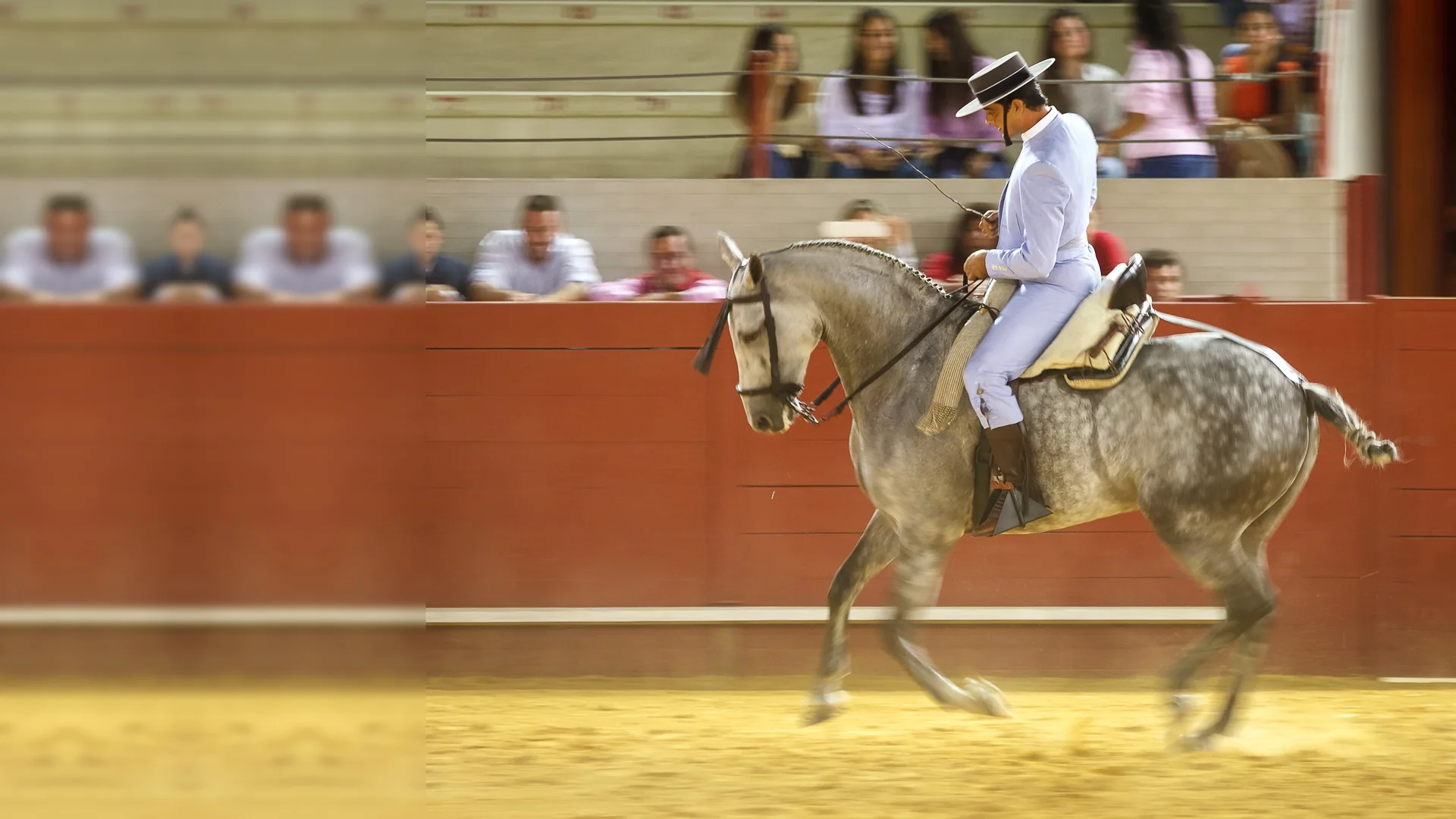
A horse show here is not a race or a competition. It is a staged performance in an arena, with riders in traditional Andalusian dress, music and choreography, and horses working through dressage movements and the cowboy-style riding of the Spanish countryside. The El Ranchito ticket describes a mixture of cowboy moves and high-level dressage, a short flamenco performance during the show, and a dance between a flamenco dancer and a horse. Spectators sit in a covered area at the equestrian centre, so the sun is less of a worry than at an open ring. The evening is aimed at visitors, so you need no horse knowledge to follow it.
The Andalusian horse
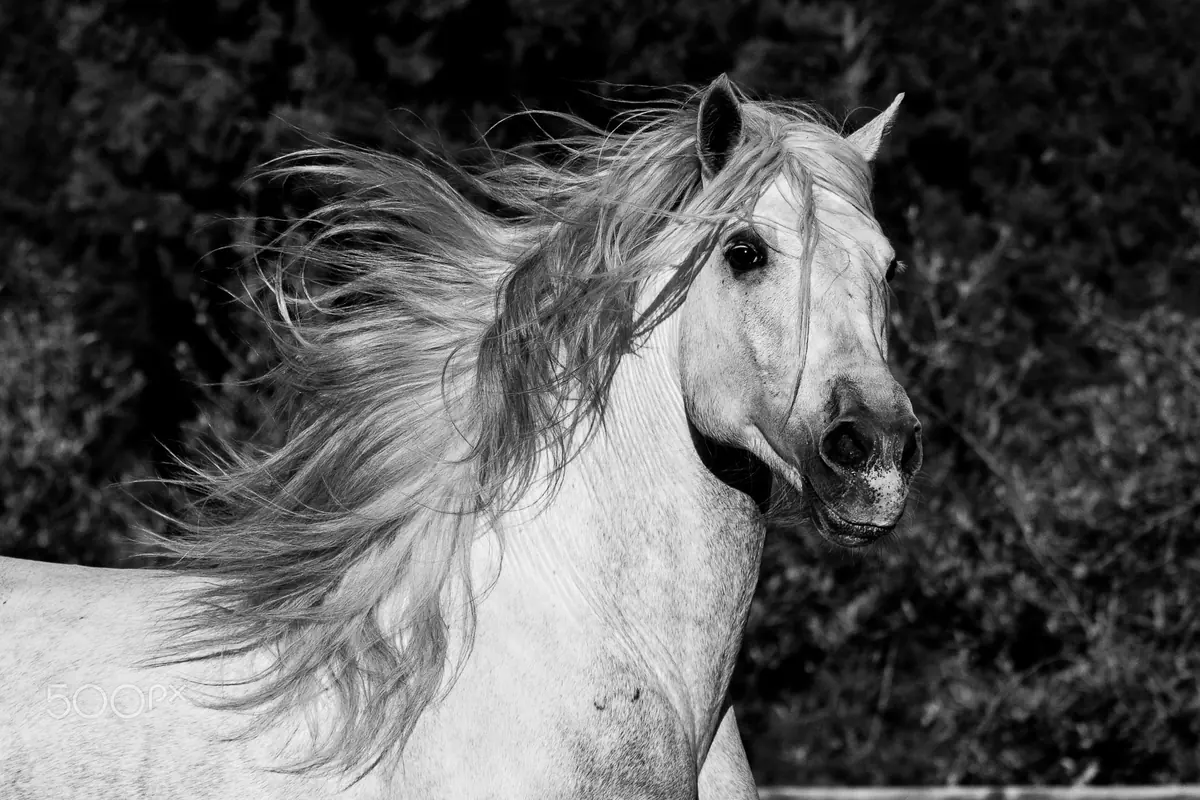
The breed most closely tied to Spanish riding is the Andalusian, also called the Pura Raza Española, or PRE, the Pure Spanish Horse. It has counted as its own breed since the 15th century, and its build has barely changed: sturdy, compact and graceful, with heavy manes and tails, and grey as the usual coat. It has a name for intelligence, sensitivity and a docile temperament, qualities that suit work in front of an audience. Which horses appear on your date is for the organiser to decide. Every living Andalusian traces back to a small number of horses bred by religious orders in the 18th and 19th centuries.
Read next: The Andalusian horse, explained
Doma vaquera, the riding of the cattle country
Spain's equestrian federation describes doma vaquera as a series of exercises, performed one after another inside a rectangle, taken from those used in the field to work with cattle. It is a recognised federation discipline with its own rules and competitions, and it is distinct from the classical Spanish school, doma clásica. When a show promises cowboy moves, this is the tradition it draws on: quick turns, stops and changes of pace that began as useful skills among herds. It is worth watching how a rider changes direction without any visible effort, because that is the sign of training.
Read next: Doma vaquera and alta escuela
High school and classical dressage
The ticket promises “high school exercises”. The phrase translates the French haute école, the advanced end of classical dressage. Classical dressage grew out of cavalry movements and battlefield training, and it is described as the art of riding in harmony with the horse rather than against it. At its best the horse shows the athleticism and grace it has when free, gathering itself by lifting the forehand and arching the neck. What your show includes is not fixed, so treat this as the vocabulary behind what you see, not a programme.
Flamenco and the horse
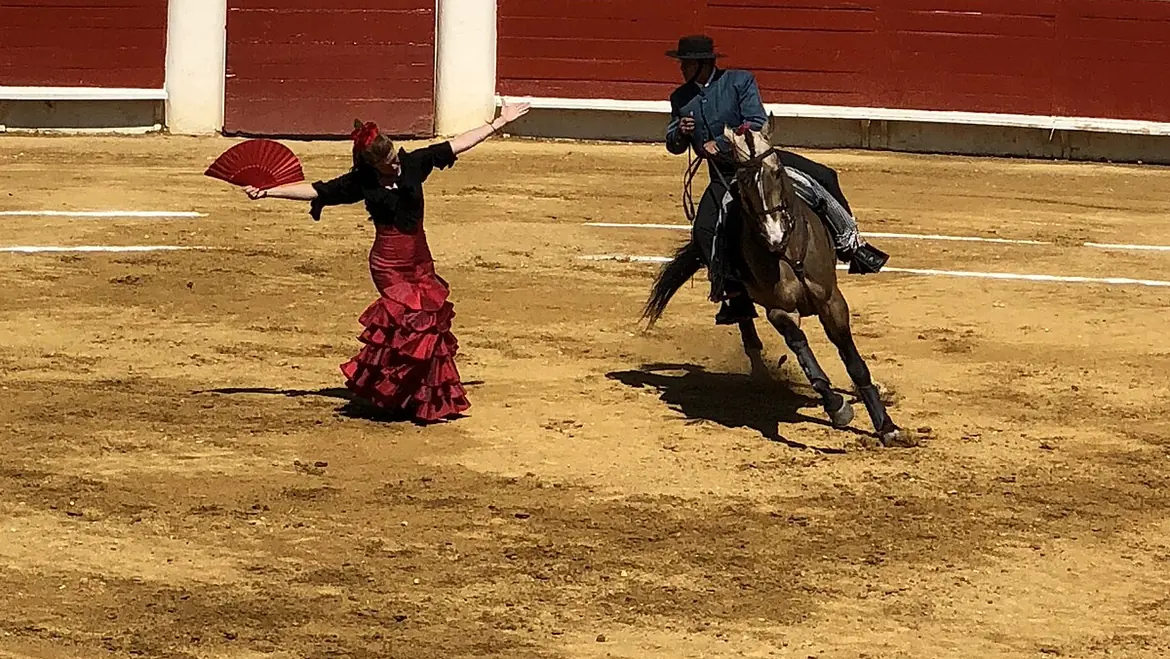
UNESCO presents flamenco as an art that blends singing, dancing and guitar playing, with Andalusia as its heartland, and it entered UNESCO's heritage list in 2010. The Roma community played an essential part in shaping it. At El Ranchito a flamenco dancer joins the horses in the ring, and the ticket highlights the dance between dancer and horse. The dinner option continues with a flamenco show of its own at the restaurant. If flamenco is new to you, the first-time viewers guide on this site explains what to listen for.
Read next: Flamenco for first-time viewers
How the day runs
The order depends on your option. With the stable visit, you arrive early at the centre by your own means, tour the stables with a guide and then take your priority seat for the show. With the show alone you go to the ticket office, redeem a physical or digital ticket and take a seat in the covered area. With the dinner option, the show is followed by a move to a restaurant a few kilometres away for dinner and a flamenco show. Start times vary with the date, and your confirmation gives yours. If you add the stable visit, ask yourself whether you would rather arrive early and see the horses at rest before they work, or keep the afternoon free.
Seats, comfort and access
The audience sits in a covered area. Guests who mention the seats say they are basic, so a cushion or a short walk in the interval helps on longer options. For people with reduced mobility, a stair-free area on the ground floor is protected by safety glass. If you need particular help, tell the organiser when you book so that it can plan your seating, and ask about the route from the car park before the day.
Getting there from Torremolinos, Benalmádena and Málaga
The address is Senda del Pilar 4, 29620 Torremolinos, with parking at the centre. Torremolinos is about 13 km from Málaga, on the A-7 motorway and the Cercanías commuter line, and Málaga airport is close by, on the Málaga side of town. A taxi is the easy choice from any of the nearby resorts, and some options include a coach pickup from the main areas, so check the option's details before you rely on it. After the dinner option, the staff can call a taxi if you ask.
What to wear and bring
Dress for the weather of the day. The arena has fans and misting systems in summer and no heating in winter, because the horses cannot be exposed to air conditioning or heaters. Bring cash in small notes, since the bar and shop accept no cards. Photos and video are allowed without flash. Arrive early to avoid queues at the ticket office, and note that a stair-free zone on the ground floor, protected by safety glass, is reserved for guests with reduced mobility.
Who this isn't for
The show is not for people with animal allergies, which the ticket lists as an exclusion. It is also not the right night if you want a small, quiet flamenco room, if you need air conditioning, or if watching animals perform sits badly with you. Guests who review the evening say the horses and riders are well cared for and the riders gentle, but that remains a personal call. A flamenco-only show in town gives you the music without the arena.
Booking and cancelling
On GetYourGuide every option refunds the full fare when you cancel at least a day ahead, and payment can wait. The booking calendar lists the dates and the options on sale for each, and the confirmation gives the start time. Host languages are listed as English, Spanish, German and French. Tickets from other sellers carry their own conditions. Unsure which option to pick? Plans can change at no cost until the day before.
Frequently asked questions
What happens at a Torremolinos horse show?
Spanish horses and riders perform dressage and cowboy-style riding in an arena, with music, and a flamenco dancer joins a horse in one number. The dinner option adds a meal and a flamenco show at a restaurant.
Are the horses looked after?
Guests who review the show often mention the care the horses receive and the riders' kindness. The centre also states that the arena has only fans and misting systems, because horses should not be exposed to air conditioning or heaters.
Is the seating covered?
Yes, the audience sits in a covered area. The arena itself relies on fans and misting systems, so wear what suits the weather.
Do I need to speak Spanish?
No. The host languages are listed as English, Spanish, German and French, and the riding, music and dance need no translation.
How do I get there from Málaga?
Torremolinos is about 13 km from Málaga, so a taxi or car is the simplest way. The centre is at Senda del Pilar 4 with parking, and some options include a coach pickup from the main areas.
Can children go?
The ticket sets no age limit among its restrictions, and the dinner option has a children's menu. Young children may find the long evening tiring, so the show alone is the gentler choice.
Sources
- Source: Spanish equestrian federation, doma vaquera, official page
- Source: UNESCO entry for flamenco, official record
- Source: Wikipedia article on the Andalusian horse, English edition
- Source: Wikipedia article on doma vaquera, English edition
- Source: Wikipedia article on classical dressage, English edition
- Source: Wikipedia article on Torremolinos, English edition
- Source: Wikipedia article on Málaga Airport, English edition