Listening and watching
Flamenco for first-time viewers
A short guide to flamenco for first-time viewers: song, dance and guitar, the clapping and cries, and what a dancer sharing a ring with a horse adds.
Reserve a place at the show ↗Three arts in one
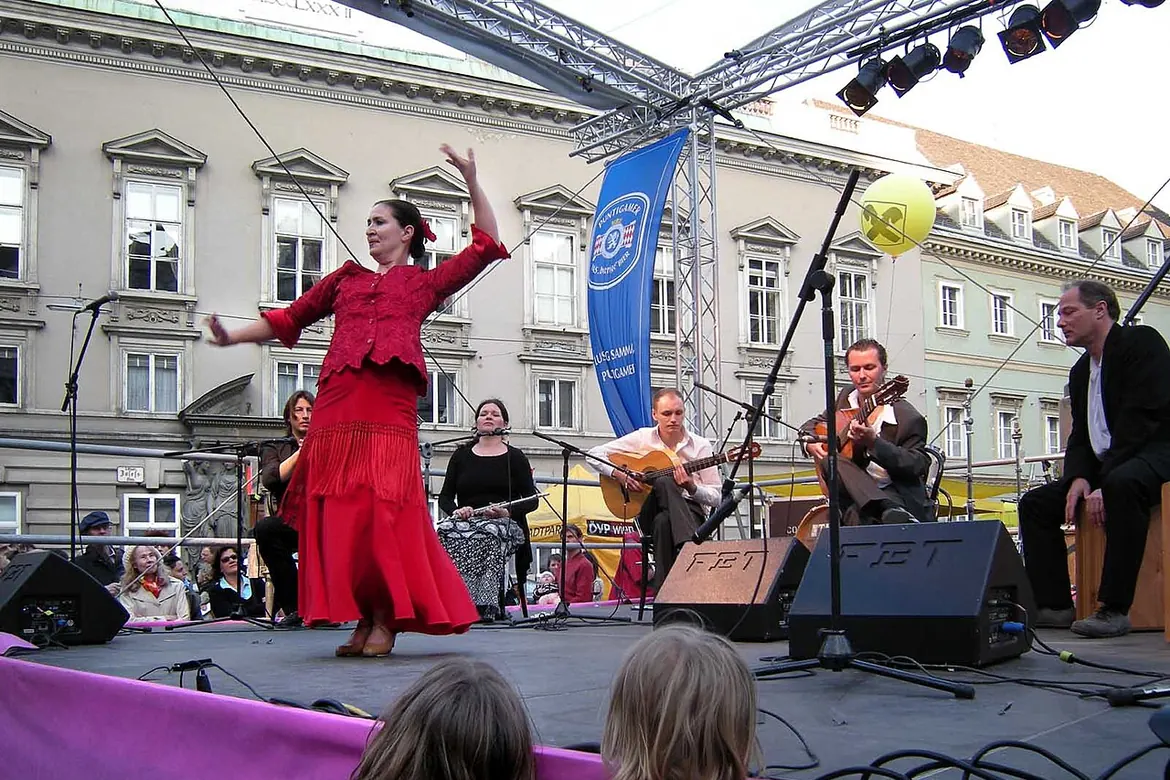
UNESCO calls flamenco an art form combining voice, dance and instrumental playing, which Spanish names cante, baile and toque. Southern Andalusia is its heartland, and UNESCO listed it among the intangible heritage of humanity in 2010. Cante is usually sung seated and without backing singers, with lyrics that are brief and simple.
Where it comes from
Flamenco grew up in southern Spain and is closely tied to the Gitano, or Roma, community, which UNESCO credits with an essential role in its development. It passes down through families, dynasties, social groups and flamenco clubs. You meet it at festivals and private parties as well as on stage, so a show can feel as much like a celebration as a recital.
The singer
Cante is the vocal side of flamenco, sung by men and women. UNESCO notes that its feelings range from grief and tragedy to joy and fear, expressed through sincere, expressive lyrics. Understanding every word is not required: the voice carries the emotion, and the guitar and dancer respond to it.
How men and women dance it
UNESCO says the technique is complex and differs depending on whether the performer is male or female: heavier use of the feet for men, and gentler, more sensual movements for women. In practice modern flamenco puts the emphasis on lightning-fast footwork performed with absolute precision for both.
Pure, classical and modern
Flamenco puro, the style closest to its Gitano roots, is often danced solo and is built on cues and calls that shape an improvised structure, not on fixed choreography. Classical flamenco, the style Spanish dance companies perform most, is danced proudly upright with long arms. Modern flamenco demands years of study. A single show may blend all three.
The guitar
The guitar, or toque, has long outgrown its first job of accompanying a singer. A guitarist sets the rhythm by strumming and by tapping the soundboard, and may play solos. Castanets, hand-clapping and foot-stamping join in as other instruments.
Palmas and compás
Compás is the beat pattern holding a piece together. With no guitarist it is carried by hand-clapping, called palmas, or by knuckles knocked on a table. Bulerías, the emblematic style, moves in a twelve-beat cycle stressing particular beats, and palmas are played in groups of six across it.
The cries from the floor
Performers are encouraged by shouts such as “olé”, and the guitar, clapping and footwork answer one another. Dancers use heavy footwork, called zapateado, and may use props such as castanets, shawls and fans, like the red fan in many photographs of the dance.
Sevillanas, the festival cousin
Sevillanas belong to Seville and its surroundings, a folk music and dance performed at fairs and festivals by couples of every age. Their musical pattern is limited, and learners of flamenco often start with them. If a show includes a sevillanas number, it is the most festive style on the programme.
A dancer beside a horse
At El Ranchito the flamenco is part of a horse show. The ticket highlights a dance between the flamenco dancer and the horse, and the dinner option continues with a separate flamenco show at a restaurant. Expect less of the intimacy of a small room and more of an arena spectacle in the riding part.
Read next: Torremolinos horse show explained
What to listen for
Listen for the voice first, then the guitar, then the clapping. Notice where the dancer stops and the room goes silent before the feet return. You do not need Spanish: the rhythm, the footwork and the silences carry the meaning, and the hosts at the show speak English, Spanish, German and French.
Sources